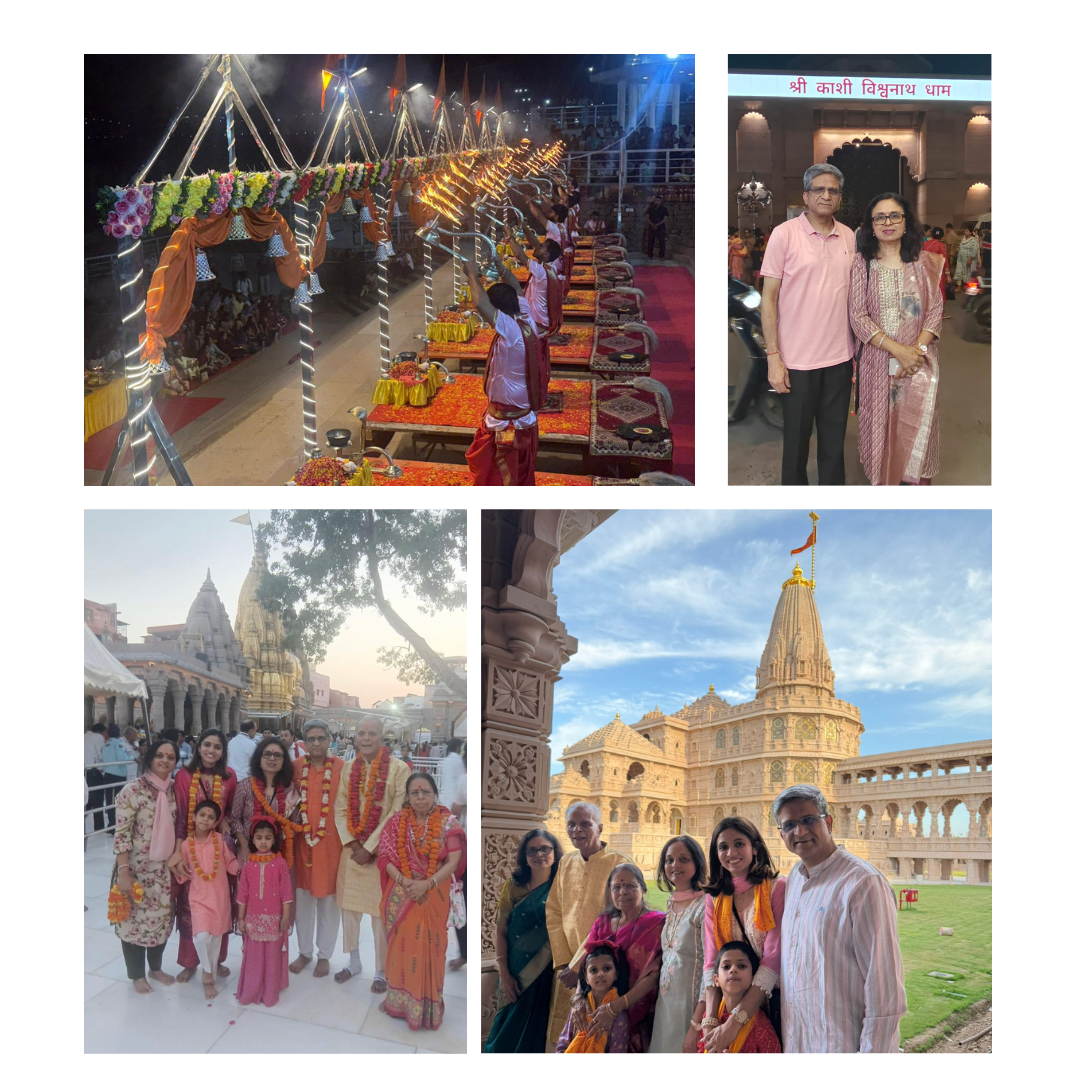
Ever since we watched the historic inauguration of the Ram Janmabhoomi Temple, a quiet yet persistent desire had taken root in my heart to visit this sacred place. But more than fulfilling my own wish, I felt a deep calling to take my parents along. Pilgrimages are always special, but sharing them with those who shaped your life adds a layer of meaning that words can scarcely capture.
Planning this journey from Pune to Ayodhya was not simple. It required careful coordination, including a connecting flight via Delhi. Travelling with elderly parents, 90 and 84, comes with its own set of challenges. Yet, determination overshadowed every obstacle. Alongside Ayodhya, we also planned to visit Varanasi for darshan at the sacred Kashi Vishwanath Temple—another spiritual cornerstone of India.
The moment we landed in Ayodhya, something felt different. There was a certain stillness in the air, a quiet energy that welcomed every devotee with open arms. As we approached the Ram Janmabhoomi temple complex, the sheer scale of the place left us in awe. Spread over more than 70 acres, the temple stands as a magnificent tribute to faith, devotion, and architectural brilliance.
The beautifully carved shikhars rise majestically toward the sky, each detail thoughtfully crafted. As we walked along the temple परिसर, the intricate carvings on the walls immediately drew our attention. They narrate scenes from the Ramayana—bringing the story of Lord Rama to life in stone. Every sculpture seemed to speak, every panel told a story, and every corner reflected centuries of cultural depth.
We were fortunate beyond words that day. Accompanying us was the architect behind the temple’s masterplan, along with one of the trustees. Hearing firsthand about the vision, planning, and dedication that went into building this sacred site was truly humbling. It gave us a deeper appreciation—not just for the physical structure, but for the collective effort, perseverance, and faith that made it possible.
We also learned about the immense contributions and commitment of leaders like Hon’ble Narendra Modi and Mr. Nripendra Mishra, whose roles were instrumental in bringing this long-awaited dream to life. Understanding the journey behind the temple’s construction made our visit even more meaningful.
Standing there, as Indians, our hearts swelled with pride. This was not just a temple—it was a symbol of our heritage, our traditions, and our collective identity. It reminded us of the richness of Indian culture and the importance of preserving it for future generations.
What made this journey even more special was the presence of three generations—my parents, us, and our grandchildren. Watching the youngest members of our family absorb the stories, the devotion, and the place’s cultural significance was deeply fulfilling. It felt like passing on something invaluable—something far beyond material inheritance.
Our journey didn’t end in Ayodhya. In Varanasi, the darshan at Kashi Vishwanath ji was equally divine. The spiritual aura of the ancient city, the chants, the ghats, and the sacred Ganga all came together to create an experience that touched the soul.
As I reflect on this journey, one thought stands out clearly: every Indian family should undertake such pilgrimages at least once. In a fast-paced, modern world, these experiences reconnect us with our roots. They remind us of who we are, where we come from, and the values that define us.
Taking children to such places is not just about religion—it is about education, identity, and belonging. It is about ensuring that the stories, traditions, and cultural pride continue to live on through generations.
This journey was not just a trip. It was a blessing, a lesson, and a memory that will stay with us forever.