I was born into a family where my only sibling was my younger sister, Swati. I never had a real brother of my own. Yet, life has its own way of gifting us relationships we never imagined. Our home often welcomed foreign students from Nigeria, Ghana, Iran, Yemen, UAE, and many other countries. They came to experience Indian culture, and one of the most beautiful traditions they witnessed was Raksha Bandhan.
I still remember — Swati and I, as children, tying rakhis to these students who had become like brothers to us. We didn’t speak the same mother tongue, we didn’t belong to the same religion or culture, yet when that simple thread was tied, there was an unspoken promise, a feeling of belonging, and a mutual respect that went beyond borders. We still keep in touch with many of them even today. It is amazing how a single tradition sowed seeds of lifelong friendships and love.
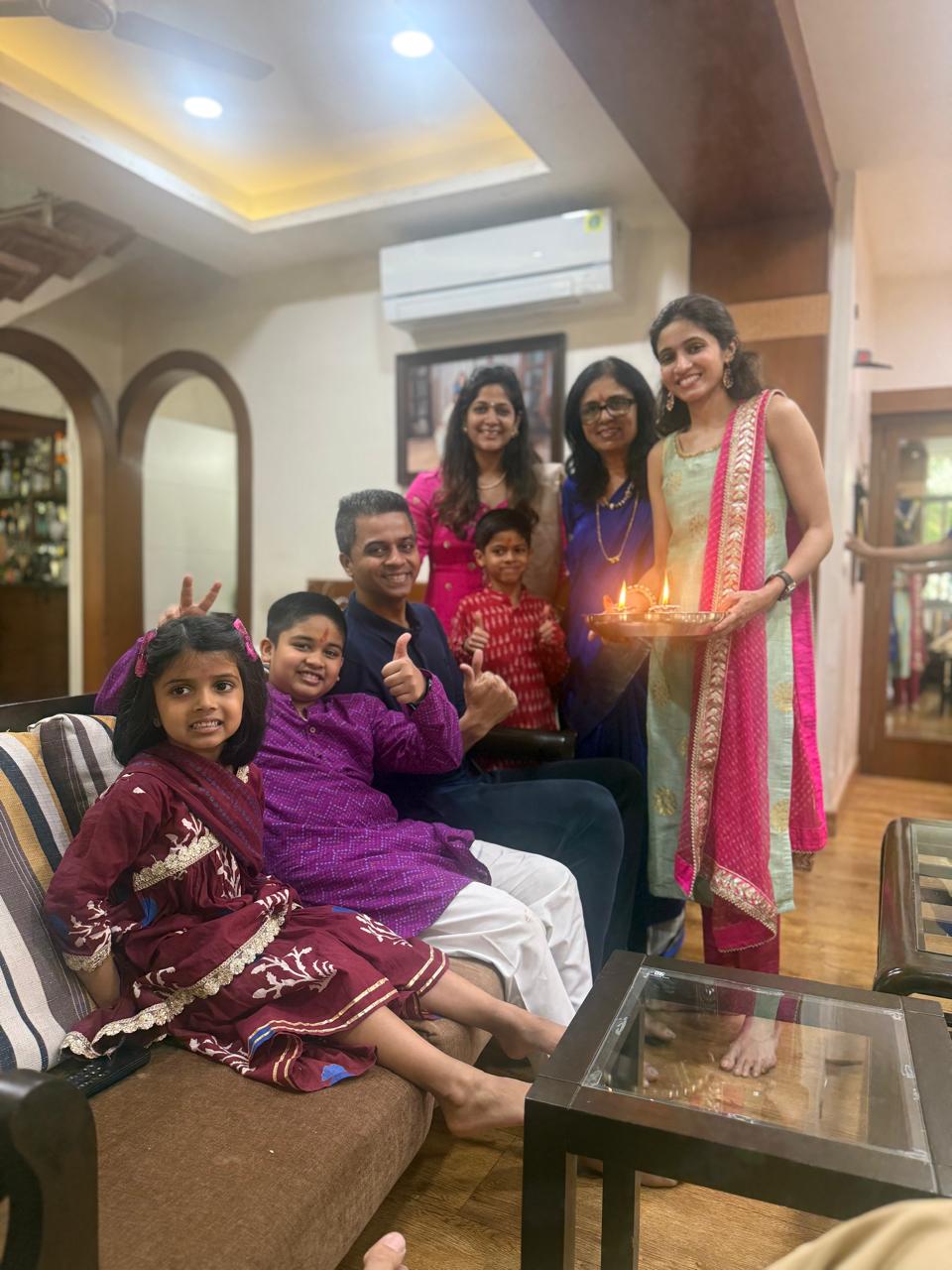
Years later, the cycle continued in my own home. My daughter Amruta lovingly ties a rakhi to my son Amay. And now, in the next generation, little Aaria ties rakhis to Vir and Aryan. Watching them giggle, exchange sweets, and tease each other fills my heart with joy — because it is not just a ritual; it is the weaving of invisible threads of love, trust, and protection that will hopefully stay with them for life.
But when I sit back and truly think about it, I ask myself: What is Raksha Bandhan really about? Traditionally, it is the sister tying a thread around her brother’s wrist, and the brother vowing to protect her. But protect her from what? From the world? From hardships? From herself?
In today’s time, the meaning of protection needs to evolve. Protection should not mean sheltering or restricting a sister’s life; it should mean enabling her to live it to the fullest.
When we look at our communities, especially in our own country, we still see a sad reality: girls are often expected to take on the bulk of household chores, put their dreams on hold, and fit into roles that society assigns them. In such a world, a brother’s promise must be more than symbolic. His vow should be to stand up for his sister’s right to an education, yes — but also for her right to choose her own path.
Empowerment is not just about degrees on a wall. It is about giving a sister the space to think freely, to make her own choices, to explore her potential without fear or hesitation. It’s about telling her: I will stand by you, whether the world agrees with you or not.
The real raksha — protection — is not from danger alone, but from limitation. Not from enemies, but from a society that sometimes quietly dictates how far a girl can go. And the real bandhan — bond — is the mutual respect, love, and trust that grows when a brother celebrates his sister’s individuality and strength.
I believe this is the true essence of Raksha Bandhan. It is not just about a thread tied once a year. It is about an unbreakable connection that is nurtured every single day — a promise that says: “I will protect your dreams as fiercely as I would protect your life. I will fight for your freedom as much as I fight for my own. And I will celebrate you, not just as my sister, but as the incredible person you choose to become.”
That, to me, is the most sacred bond of all.